SwordHealth · Thrive
Phoenix OS
Show or hide project details
Role
Led the product vision, experience architecture and interaction model across the operating system, from core flows and system states to motion and visual language.
Leadership
Established Phoenix OS as the first expression of SwordHealth new visual direction, aligning Design System, Product, Engineering and OS around a shared experience.
Executive alignment
Presented directly to the CEO and approved as the foundation for the new Phoenix OS experience.
Collaboration
Design System, Brand, Product, Engineering and OS
Tools & capabilities
Figma · Design system · Tokens · Motion Design · Prototyping · User testing · Computer Vision · Device control · Voice UI
The premise
One experience,
built across hundreds of states.
Receiving a ThrivePad at home was meant to feel like the beginning of something new. A dedicated piece of technology, designed around the user and their recovery.
But that promise weakened as soon as the device was turned on.
Phoenix began as a privileged Android application layered over the operating system. Critical parts of the journey still depended on native Android screens, behaviours and settings, creating an experience that shifted between different visual languages, interaction patterns and levels of accessibility.
This fragmentation was not only a visual problem. It introduced uncertainty during activation, at the exact moment when users needed clarity and reassurance. The setup journey contained several points of friction and abandonment, making it harder to turn the initial excitement of receiving the product into a successful first session.
I led the transformation of Phoenix into a cohesive, end-to-end operating experience, designed to manage expectations, reduce activation friction and guide users confidently towards their first moment of value.
The result was a shared system of visual, interaction and motion principles that brought hundreds of states into one continuous product experience.
The Vision
Make complex technology feel calm, coherent and inevitable.
Activation required users to navigate connectivity, permissions, hardware, account setup and system states. The complexity could not disappear, but the experience around it could become clearer, more predictable and easier to trust.
The vision was to turn these separate technical moments into one continuous product journey, preserving the excitement of receiving Thrive while guiding users confidently towards their first session.
Beyond the clinical form
Clinical data, without the feeling of a clinical form.
Exercise flags, pain, fatigue and MSAT were turned into a natural end-of-session flow, preserving clinical value without exposing the mechanics of a questionnaire.Add paragraph text…
Motion, interaction patterns and reusable behaviours turned forms, inputs and system states into clear, guided moments.
The design system did not just define how Phoenix looked. It defined how it responded, transitioned and communicated.
Design for every state
Complex connections, simple decisions.
System communications
Calm when things do not go to plan.
Errors were designed to explain what happened, distinguish recoverable from blocking states and give users a clear next action without exposing unnecessary technical complexity.Add paragraph text…
System communications: explain what changed.
Conditional information: explains what may affect what comes next.
Blocking errors: explain why the experience cannot continue.
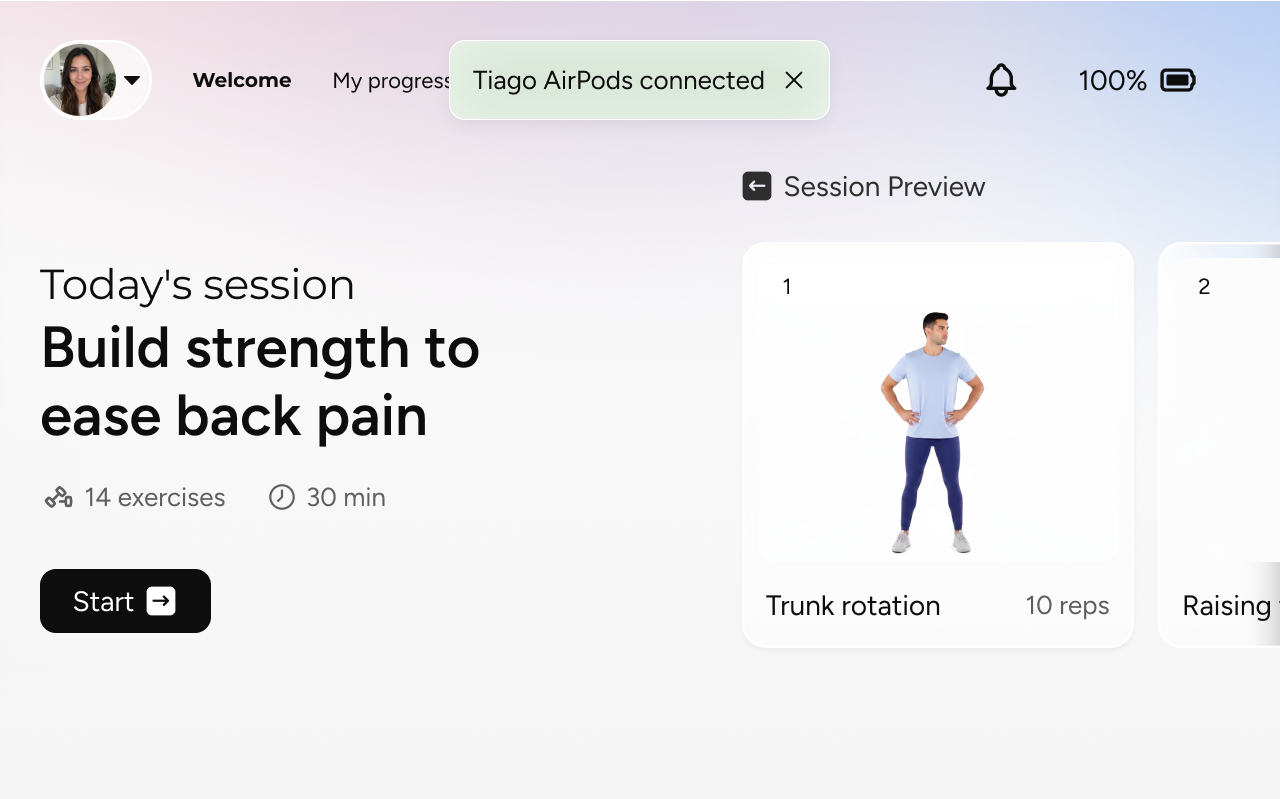
System communications 
Blocking error 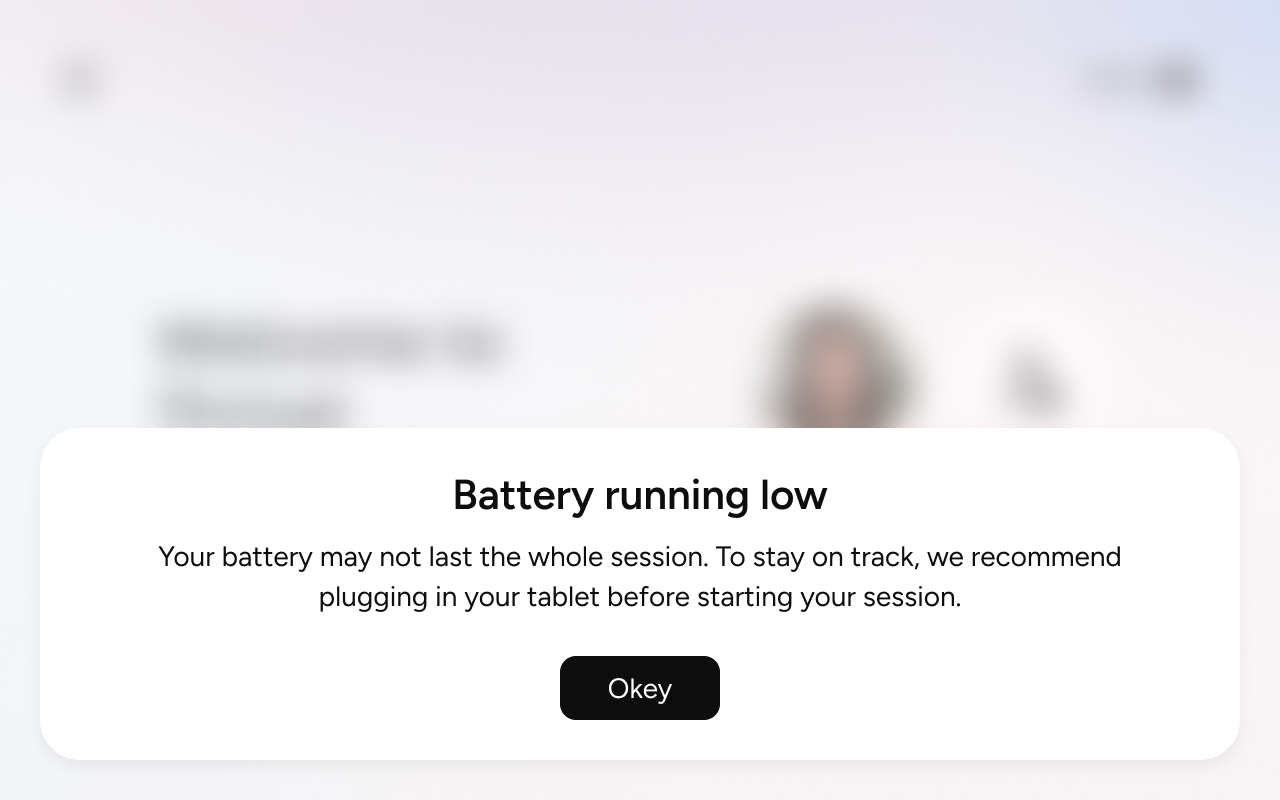
Conditional information
Phoenix AI
A voice that grew into a care experience.
Phoenix began in Thrive. Her first words were simple positioning instructions, helping patients perform exercises correctly.Add paragraph text…
Over time, that voice expanded across the entire journey: welcoming users into their first session, guiding them through treatment and opening a conversation whenever more context was needed.
After each session, patients could explain what happened, what felt difficult and what should change next. Relevant insights were then summarised for their physical therapist, connecting every conversation back to human care.
What started as exercise guidance became Sword’s AI Care Specialist, extending across app, web, tablet and the wider product ecosystem.